Effect of tyrosine supplementation on clinical and healthy populations under stress or cognitive demands
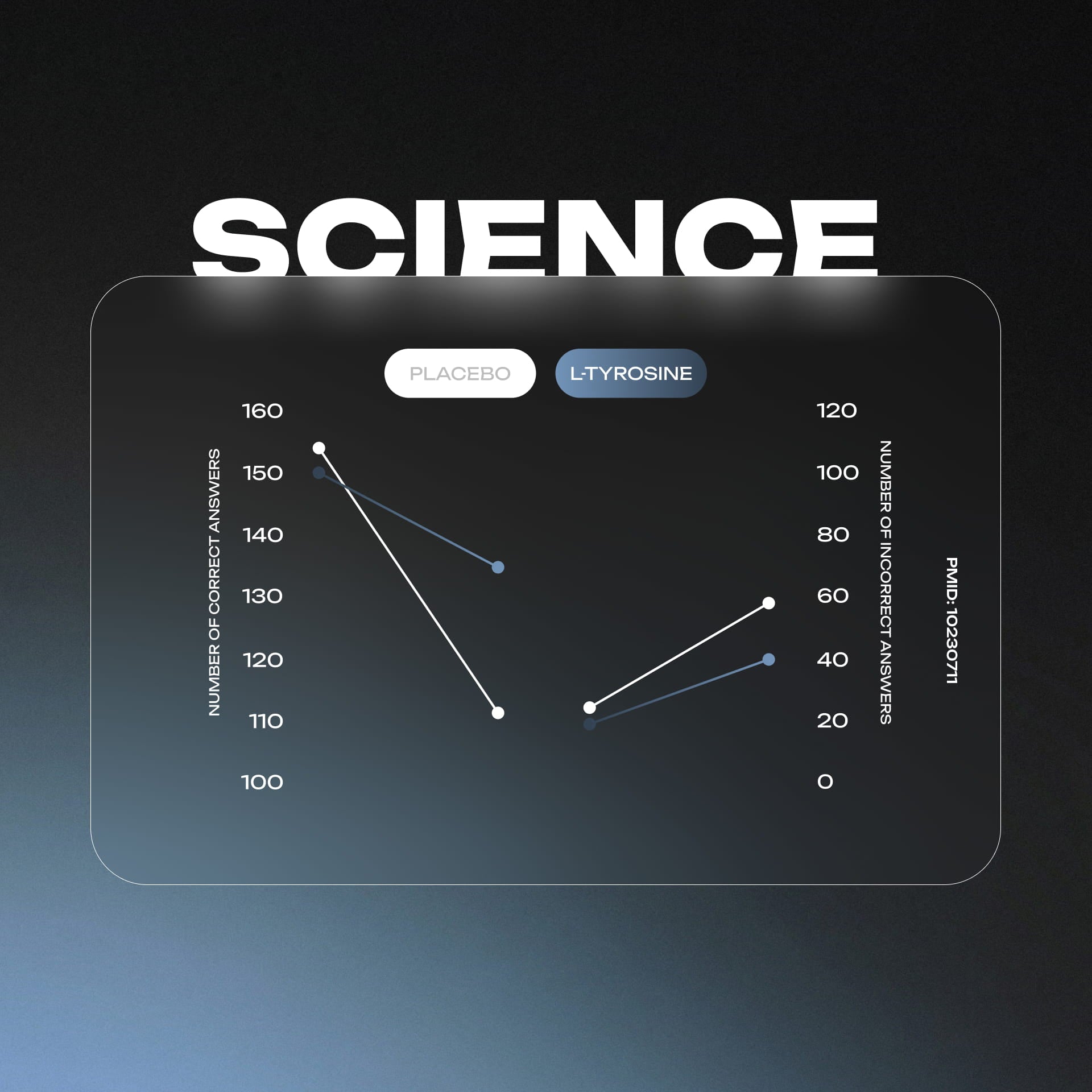
A 2015 review of studies reports that tyrosine (at doses ranging from 2 g up to 300 mg/kg) effectively enhances cognitive performance, especially in short-term stressful and/or cognitively demanding situations. It can help prevent declines in cognitive function under challenging conditions such as cold, heat, physical activity, poor sleep, noise, psychological stress, and more.
Institute of Psychological Research and Leiden Institute for Brain and Cognition, Leiden University, Netherlands
Link to the study
Tyrosine improves cognitive performance and reduces blood pressure in cadets after one week of a combat training course
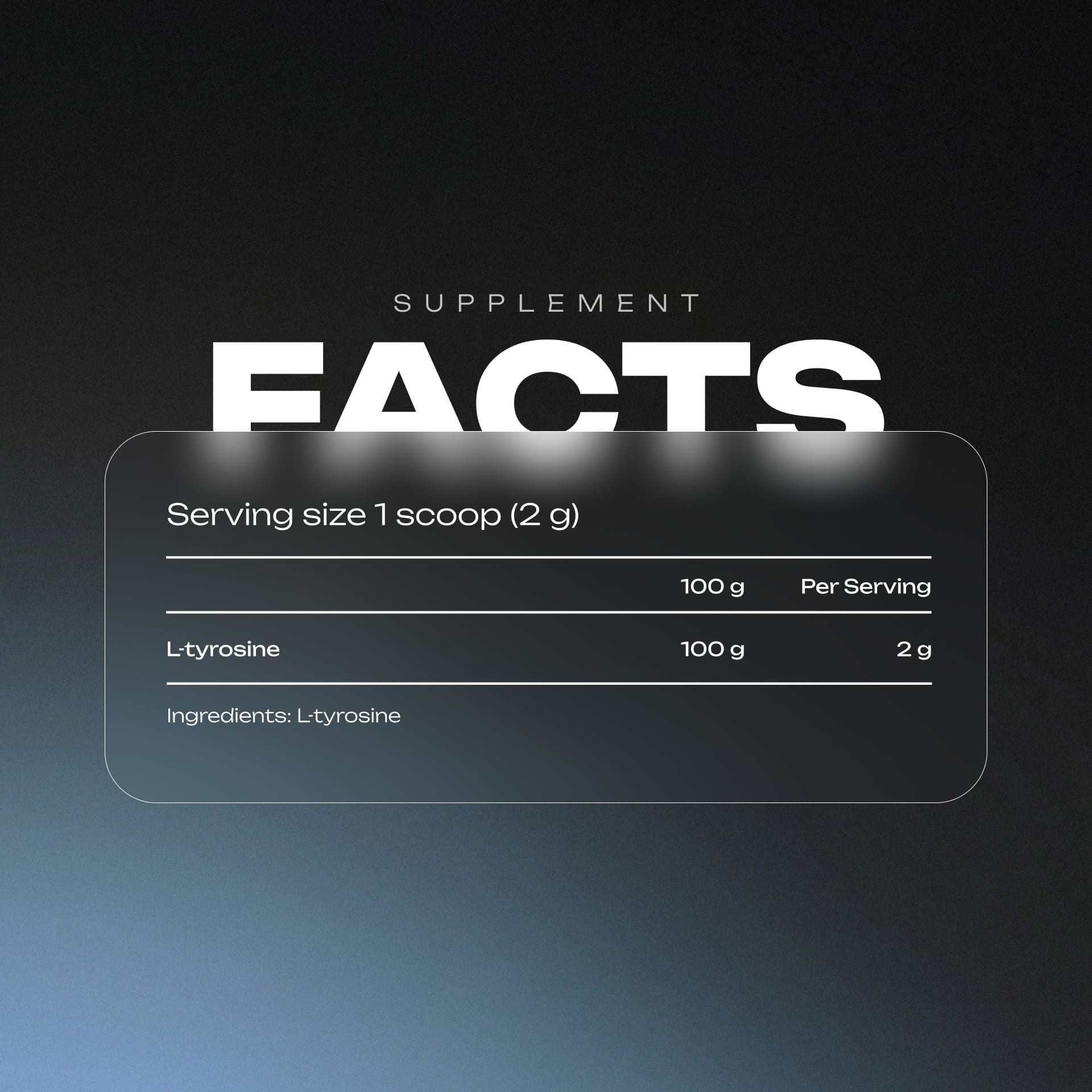
This study examined the effects of 2 g of tyrosine on mental performance in a group of 21 cadets during demanding military combat training. The group receiving tyrosine achieved better results in memory and tracking tasks compared to the placebo group. Tyrosine supplementation also reduced systolic blood pressure.
Department of Clinical Neuropsychology, Vrije Universiteit, Amsterdam, The Netherlands
Link to the study
The effects of tyrosine on cognitive performance during extended wakefulness
The study concluded that taking tyrosine during a night of sleep deprivation was associated with a significant improvement in the usual decline in performance on a psychomotor task and a significant reduction in the likelihood of failure on a vigilance task.
Naval Aerospace Medical Research Laboratory, Pensacola, USA
Link to the study
Behavioral and cognitive effects of tyrosine intake in healthy human adults
This study shows that tyrosine can improve cognitive function in healthy adults, especially in situations where catecholamines in the brain (dopamine, norepinephrine) become depleted. The authors explain that tyrosine “counteracts” the drop in these neurotransmitters under demanding conditions, helping maintain mental performance.
Department of Psychology, University of Groningen, Netherlands
Link to the study
Tyrosine for Mitigating Stress and Enhancing Performance in Healthy Adult Humans
A systematic review reports that across studies, tyrosine had a positive effect on cognitive performance under stress. Despite the weaker quality of some data, the authors confirm that tyrosine may reduce the impact of stress and improve performance in demanding situations, although more studies are needed.
Uniformed Services University of the Health Sciences, USA
Link to the study
Dietary Nitrate and Physical Performance
Nitrate supplementation can improve muscular work efficiency and endurance performance, typically by a few percent. In some cases, it may also help with short-term, high-intensity exercise.
Department of Sport and Health Sciences, University of Exeter, United Kingdom
Link to the study
Dietary nitrate supplementation improves sprint and high-intensity intermittent running performance
In high-performance team-sport athletes, nitrate supplementation improved maximal sprint performance as well as repeated high-intensity efforts. The results suggest benefits for sports that involve short, explosive intervals.
Sport and Health Sciences, University of Exeter, UK
Link to the study
Beetroot juice and exercise: pharmacodynamic and dose-response relationships
Nitrate supplementation reduced oxygen consumption during moderate-intensity exercise and extended time to exhaustion at high intensity. This suggests improved energy efficiency during performance.
Sport and Health Sciences, College of Life and Environmental Sciences, University of Exeter, United Kingdom
Link to the study