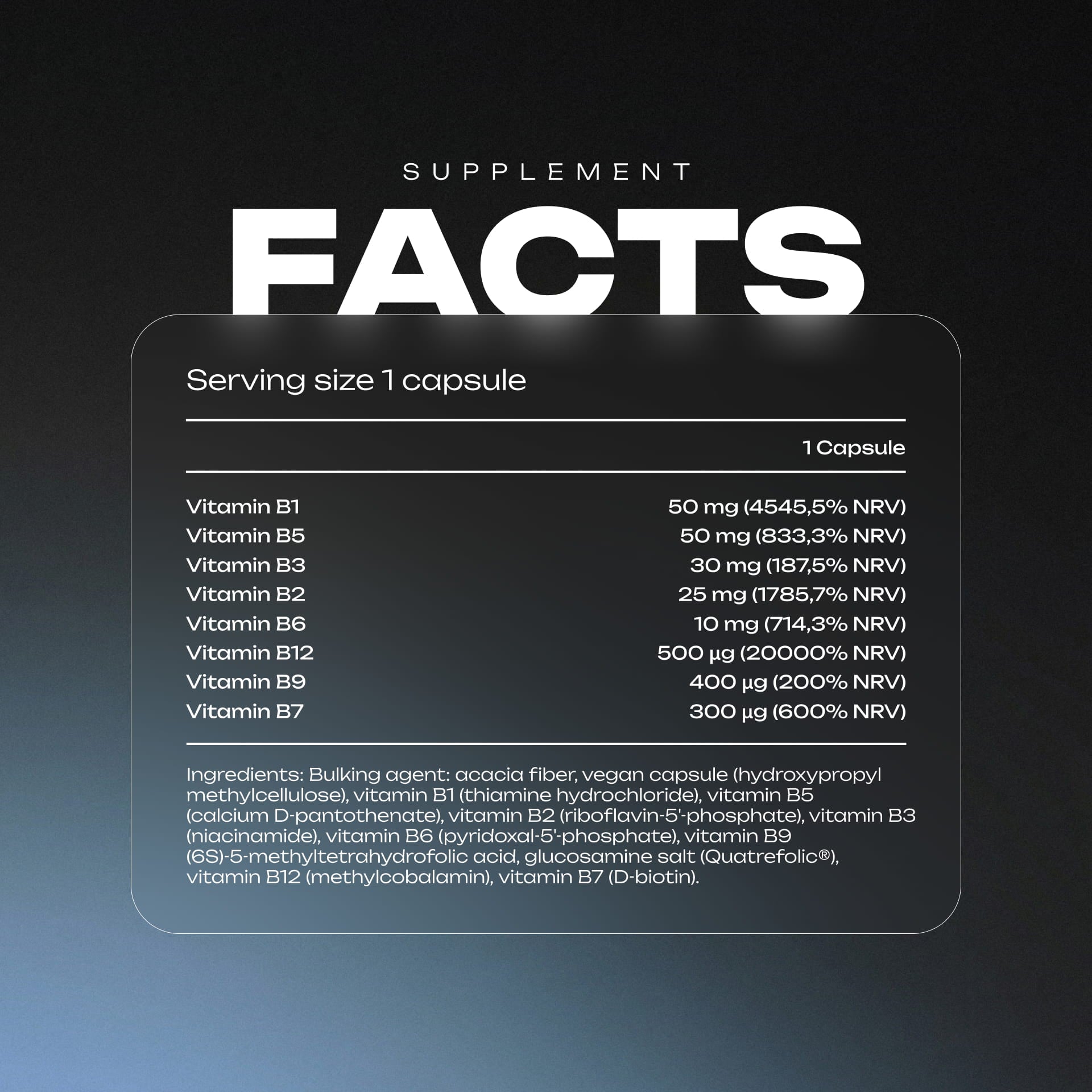
Vitamin B1
Thiamine contributes to efficient carbohydrate metabolism, energy production, and proper nervous system function. Supplementation may reduce premenstrual syndrome (PMS) symptoms in women.
Vitamin B2
Vitamin B2 in its active form, riboflavin-5-phosphate, is a key component of many enzymes that regulate immune function, the nervous system, and especially energy production. Supplementation may even reduce the frequency and severity of migraines.
Vitamin B3
Niacin (vitamin B3) helps maintain healthy blood cholesterol levels, and adequate intake is therefore crucial for preventing cardiovascular disease.
Vitamin B5
Pantothenic acid, like most B vitamins, is essential for optimal cellular energy production, metabolism, and the synthesis of a range of hormones.
Vitamin B6
Vitamin B6 in its active form, pyridoxal-5-phosphate, acts as a cofactor for coenzyme A, which is involved in energy production and the synthesis of various neurotransmitters, including dopamine (good mood and motivation) and melatonin (the sleep hormone). Vitamin B6 therefore regulates mood, stress levels, and energy production. Supplementation can also reduce premenstrual syndrome (PMS) symptoms in women.
Fact Sheet
Vitamin B7
Vitamin B7 enables the conversion of carbohydrates, fats, and proteins into energy that fuels all bodily processes. Healthy hair, skin, and nails cannot function properly without it.
Vitamin B9
Vitamin B9 in its active, patented form Quatrefolic® supports the development and health of the nervous and circulatory systems. While around 40% of the population cannot properly absorb the commonly available inactive form of vitamin B9 (folic acid), the active form Quatrefolic® does not face the same issue.
Vitamin B12
Vitamin B12 in its active form, methylcobalamin, supports nerve function, red blood cell formation, and helps prevent anemia and fatigue.